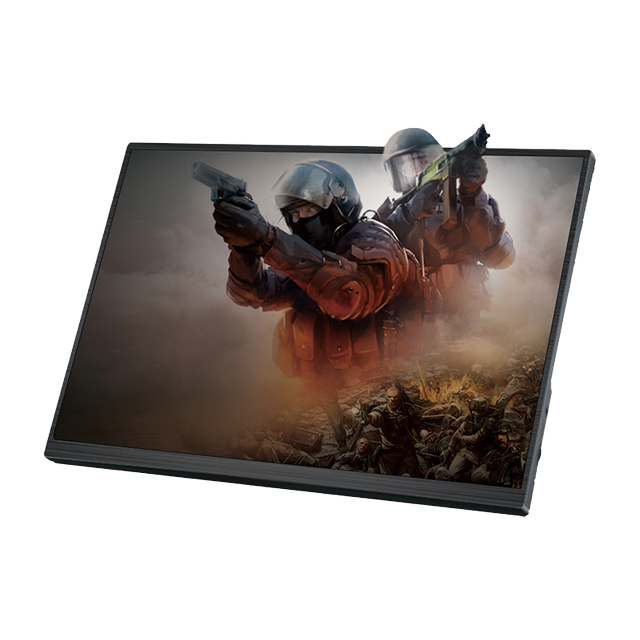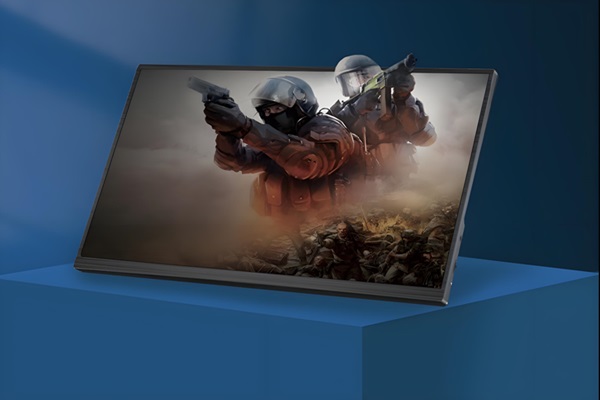
The evolution of 3D technology has significantly impacted various fields, with education being one of the most promising areas for its application. As educational institutions strive to enhance learning experiences, 3D education emerges as a transformative approach. By integrating 3D monitors, particularly naked-eye 3D technology, educators can offer immersive and interactive learning environments. This article explores the development of 3D technology, its technical foundations, and its application in educational settings, emphasizing the role of naked-eye 3D in revolutionizing education.
Technical Foundation of 3D Display
3D displays have evolved from traditional stereo glasses to advanced naked-eye 3D technology. Stereo glasses require viewers to wear special glasses to perceive depth, while naked-eye 3D eliminates this need, offering a more natural viewing experience. The working principle of 3D displays involves creating depth perception through the parallax principle and grating technology. These techniques manipulate light paths to deliver different images to each eye, simulating depth.
Key technical parameters such as resolution, refresh rate, and viewing angle play crucial roles in the effectiveness of 3D education. The high resolution ensures clarity and detail, essential for educational content. A high refresh rate reduces motion blur, enhancing the viewing experience. A wide viewing angle allows multiple students to view the content simultaneously, making it ideal for classroom settings. These parameters directly impact the teaching effect, making it vital for educational institutions to choose the right 3D monitors.

Application Scenarios of 3D Display in Teaching
1. Natural Science Teaching
In subjects like chemistry and geology, 3D education enables the three-dimensional display of molecular structures and geological formations. Students can visualize complex structures, enhancing their understanding of spatial relationships and interactions.
2. Medical Education
3D monitors are invaluable in medical education, offering three-dimensional simulations of human anatomy and organ functions. This immersive approach allows students to explore the human body in detail, improving their comprehension and retention of complex concepts.
3. Engineering and Technology
In engineering, 3D education facilitates the analysis of mechanical structures and circuit layouts. Students can interact with 3D models, gaining insights into design and functionality that are difficult to achieve with traditional methods.
4. Art and Design
For art and design students, 3D monitors provide a platform for three-dimensional modeling and visual teaching of spatial layouts. This technology allows students to experiment with designs and visualize their creations in a realistic setting.
5. History and Culture
3D education brings history to life by enabling the three-dimensional reproduction of ancient buildings and cultural relics. Students can explore historical sites and artifacts in detail, fostering a deeper appreciation and understanding of cultural heritage.
Conclusion
The integration of 3D monitors in education, particularly naked-eye 3D technology, offers unparalleled opportunities to enhance learning experiences. By providing immersive and interactive environments, 3D education can transform traditional teaching methods, making learning more engaging and effective. Educational institutions and technology developers must collaborate in promoting the popularization and optimization of 3D education. As we embrace this innovative approach, we pave the way for a future where education is not only informative but also inspiring and transformative.