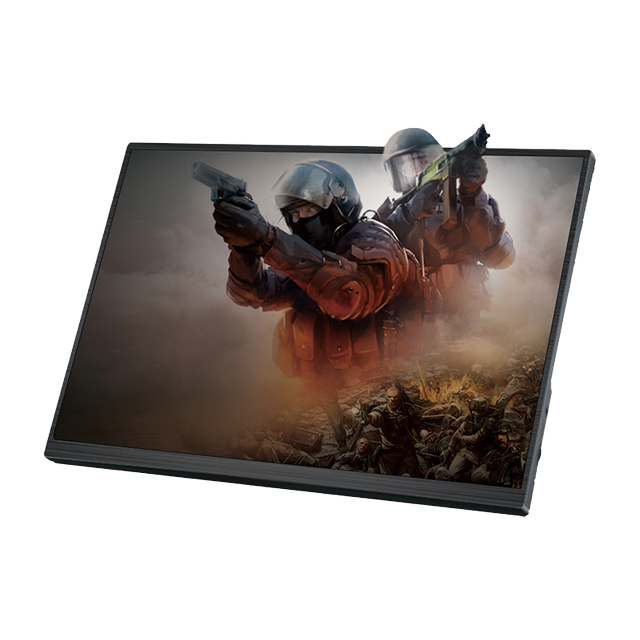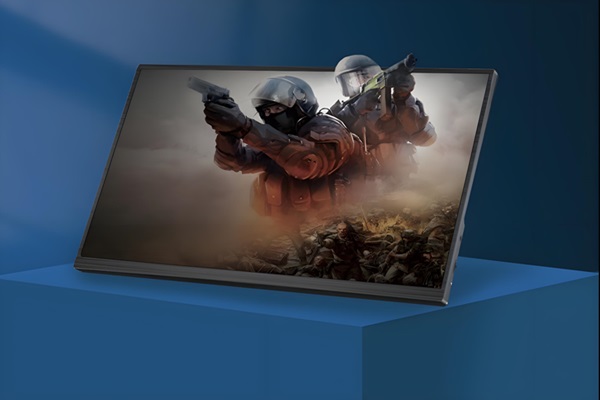
The arrival of 3D TV revolutionized home entertainment by transforming flat, two-dimensional images into immersive, depth-filled experiences. Viewers can feel as if they’re stepping into a movie scene or exploring distant worlds from the comfort of their living room. This breakthrough has opened new possibilities for cinema, gaming, and beyond, making it essential to understand how 3D LED TV works, its various types, applications, and where it’s headed next.
2. Principles of 3D TV
2.1 Human Binocular Vision
Humans perceive depth because each eye captures a slightly different perspective. Our brain fuses these two images into a single three-dimensional view. 3D LED TV mimics this natural process by delivering distinct images to your left and right eyes, tricking your brain into sensing depth.
2.2 How Stereoscopic Images Are Created
To achieve stereoscopy, 3D TV systems encode two separate image streams—one for each eye—into the broadcast or media signal. Special glasses or screen technologies then ensure that each eye sees only its intended image, allowing the brain to combine them into a single 3D picture.
3. Types of 3D LED TV and How They Work
3.1 Active Shutter 3D TV
Working Principle
- Active shutter 3D TV uses battery-powered glasses whose lenses alternately darken and clear in perfect sync with the display’s frame refresh, showing left eye frames when the left lens is transparent and right eye frames when the right lens is transparent.
Advantages
- High resolution and full color depth for each eye
- Precise image alignment yields sharp, detailed 3D
Disadvantages
- Glasses are heavier and more expensive
- Require batteries or recharging
- Limited viewing angles; misalignment causes ghosting
3.2 Polarized (Passive) 3D TV
Working Principle
- Polarized 3D TV emits two images simultaneously with orthogonal polarization (e.g., horizontal vs. vertical). Lightweight polarized glasses filter each image so each eye sees only its designated view.
Advantages
- Low-cost, lightweight glasses
- Comfortable for extended wear
- Wider viewing angles with minimal flicker
Disadvantages
- Reduced brightness and contrast compared to active systems
- Slight loss of resolution, since the screen shares pixels for both eyes
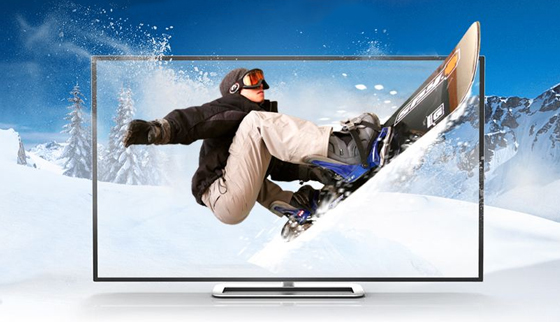
4. Applications of 3D TV
Home Entertainment
- Watch 3D movies and sports with an immersive sense of depth
- Play 3D video games for enhanced realism and engagement
Commercial Displays
- Showcase products in auto shows, real estate presentations, and advertising
- Provide customers with a lifelike preview of features and designs
Education
- Teach anatomy, biology, and geography with interactive 3D models
- Improve comprehension by allowing students to explore structures from all angles
Industrial Design & Manufacturing
- Enable engineers to review virtual prototypes in three dimensions
- Speed up design iterations and detect flaws before physical production
5. Active vs. Passive 3D TV
5.1 Active (Shutter) TV
Features
- Also known as shutter-type 3D TV, it delivers sequential full-resolution frames to each eye via synchronized glasses.
Advantages
- Superior color reproduction and resolution
- Robust depth effect with reduced crosstalk
Disadvantages
- High cost for glasses and maintenance
- Potential flicker and viewer fatigue in bright environments
5.2 Passive (Polarized) TV
Features
- Uses simple polarized glasses to separate images; both left and right frames display simultaneously.
Advantages
- Inexpensive, lightweight glasses
- Comfortable viewing in varied lighting
Disadvantages
- Noticeable drop in brightness and sharpness
- The optimal effect is limited to certain seating positions
6. Technological Developments and Challenges
Advancements
- Higher refresh rates (200 Hz and beyond) virtually eliminate flicker and ghosting.
- Improved LCD/OLED panels deliver brighter images and wider color gamuts.
- Glass-free (autostereoscopic) displays are emerging, removing the need for glasses altogether.
Challenges
- Ghosting and viewer discomfort still occur with fast-paced content.
- Limited availability of high-quality 3D content restricts adoption.
- Production costs for 3D-enabled hardware and glasses remain relatively high.
7. Market Size & Forecast
Recent industry reports highlight both the current scale and rapid growth projections for 3D TV:
| Year | Global 3D TV Market Size (USD B) | Notes / CAGR |
| 2023 | 25.67 | Base year¹ |
| 2024 | 30.33 | +18.2% year on year¹ |
| 2025 | 36.70 | Projected² |
| 2030 | 90.57 | CAGR 19.7% (2024–30)¹ |
- The 3D TV market grew from USD 25.67 B in 2023 to USD 30.33 B in 2024, and is expected to reach USD 90.57 B by 2030 (CAGR 19.73%)
- Forecast to USD 36.70 B in 2025, at a CAGR of 20.04% (2024–30)
Gaugeless (Autostereoscopic) 3D TV Segment
- Market value was USD 1.30 B in 2023 and is projected to grow at a CAGR of 16.3% to reach USD 4.26 B by 2031.
- These numbers underscore the resurging interest in 3D TV—both in traditional active/passive systems and emerging glasses-free displays—driven by higher refresh rates, better panel technologies, and new content initiatives.
8. Conclusion
3D TV leverages our binocular vision to create compelling depth experiences in home theaters, classrooms, and design studios. Both active shutter and passive polarized systems offer unique trade-offs in cost, comfort, and image quality. While technological strides, such as higher refresh rates and glasses-free displays, promise to overcome many current limitations, content availability and affordability will ultimately determine how widely 3D LED TV thrives in the years ahead. With ongoing innovation, 3D television continues to hold exciting potential for the future of immersive visual media.