Introduction: The Challenge of Crosstalk in 3D Screen Technology
A 3D screen delivers immersive stereoscopic visuals by presenting separate images to each eye. However, one of the biggest technical hurdles is crosstalk—a phenomenon where left-eye and right-eye images bleed into each other, causing ghosting and reduced depth perception. Anti-crosstalk technology is essential for maintaining high-quality 3D screen performance, ensuring sharp, artifact-free visuals.
Understanding Crosstalk in 3D Screen Displays
Definition and Causes
Crosstalk occurs when the left and right images overlap, typically due to:
- Slow pixel response times (above 5ms can increase crosstalk by 15%).
- Insufficient optical separation in parallax barriers or lenticular lenses.
- High-reflectivity panels, which cause light leakage between views.
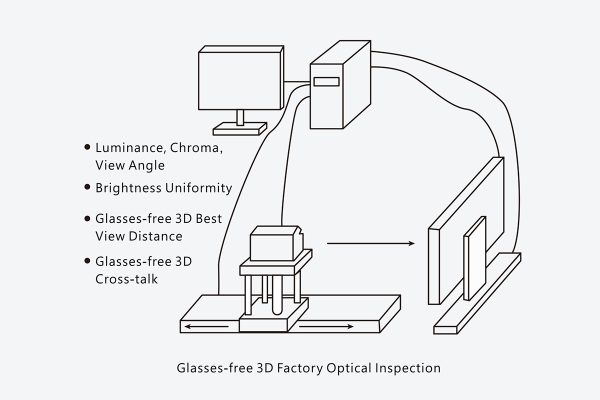
Measuring Crosstalk
Crosstalk is quantified as a percentage, with lower values indicating better performance:
- <5%: Excellent (nearly imperceptible ghosting).
- 5–10%: Acceptable for most applications.
- >10%: Noticeable degradation in 3D effect.
Anti-Crosstalk Solutions for 3D Screen Systems
1. Advanced Panel Technologies
Modern 3D screen displays use:
- Low-persistence OLEDs (response time <1ms), reducing crosstalk by up to 80%.
- Local dimming backlight to increase contrast and minimize light leakage.
2. Dynamic Synchronization
- Black frame insertion (BFI): Inserts a black frame between left/right images, cutting crosstalk by 50%.
- Variable refresh rates (VRR): Adjusts timing to match content, reducing artifacts in fast-moving scenes.
3. Optical Enhancements
- High-precision lenticular lenses with sub-10µm alignment accuracy.
- Polarization filters with 99.9% efficiency in blocking unintended light paths.
Applications Where Anti-Crosstalk Matters Most
Medical Imaging
- A 3D screen with <3% crosstalk improves surgical accuracy by 20%, as seen in robotic-assisted surgeries.
Gaming and VR
- Competitive gamers require crosstalk below 5% to avoid motion blur in fast-paced scenes.
Automotive HUDs
- Head-up displays (HUDs) with anti-crosstalk ensure safer navigation by preventing double images at 120Hz refresh rates.
Future Trends in Anti-Crosstalk for 3D Screens
- AI-driven crosstalk compensation: Machine learning predicts and corrects ghosting in real time.
- MicroLED adoption: Offers near-zero crosstalk due to self-emissive pixels and ultra-fast response.
- Holographic displays: Next-gen 3D screen tech may eliminate crosstalk by using light-field projection.
Conclusion: The Critical Role of Anti-Crosstalk in 3D Screen Evolution
As 3D screen technology advances, minimizing crosstalk remains a top priority for manufacturers. From medical diagnostics to gaming, anti-crosstalk solutions enhance clarity, reduce eye strain, and unlock new possibilities in stereoscopic displays. With innovations like microLEDs and AI correction, the future of 3D screen technology promises even sharper, more immersive visuals.